
Inside a 1970s Metal First-Aid Kit
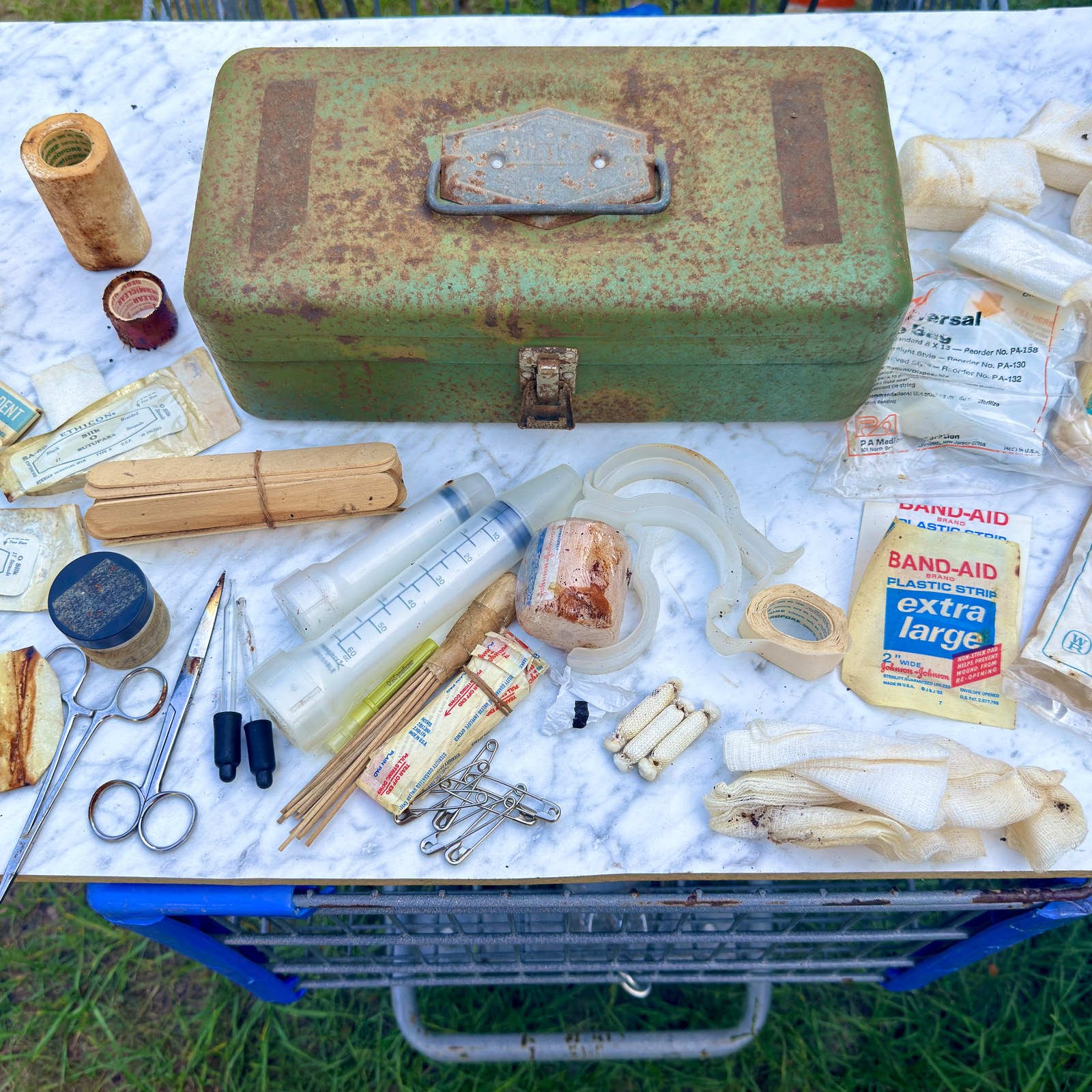
Open an old first-aid kit and you are usually looking at an accumulation: a roll of tape from one decade, dressings from another, something a previous owner threw in because it seemed medical. The case survives; the contents turn over. That is the normal story, and it is why old first-aid boxes deserve careful reading rather than a confident origin story.
This green steel case has a carry handle, removable plastic tray, and a collection of mixed period medical contents. One item in the tray carries a June 1976 date. That dates that component—not necessarily the case or every supply inside it.
The metal box, before plastic took over
For most of the twentieth century a first-aid kit meant a steel box, not a soft zippered pouch. They turned up in homes, garages, workshops, and on job sites, usually bought plain and unbranded through a hardware store or an industrial supply catalog rather than a drugstore. The case was built to survive: hinged lid, latch, carry handle, and often a removable tray to keep the small items from sliding under the large ones.
Because these boxes were sold generically and refilled by whoever owned them, most carry no maker's mark at all, or one stamped somewhere too worn to read decades later. That is the case here — the marking on the handle is not legible, and there is no confirmed military marking, so it goes into the record as an unmarked steel first-aid case rather than anything more specific. That is not a gap in the research. It is simply how most of these survive.
What is actually inside
The tray contains wrapped dressings and bandage packaging, scissors, a large plastic syringe, tape, safety pins, and other loose supplies visible in the photos. Their exact dates, original relationship to the case, completeness, and suitability for any use are unknown. Some packaging is opened, worn, torn, stained, or soiled.
What a date inside a kit does and does not prove
A single date stamp deserves care, even here. The June 1976 item dates that component. The case itself is undated, and no single item can certify a whole box on its own.
The dated component is a clue, not a certificate. The case maker is not legible, no military marking is confirmed, and we cannot verify whether every supply is original to the kit. It is more accurate to call this a vintage first-aid case with mixed period contents than to turn one visible date into an age or origin claim for the full object.
Honest condition
The case wears its age plainly, and none of it is hidden. Widespread rust, paint loss, and oxidation on the green steel. Corrosion at the latch and handle hardware, and adhesive remnants left on the lid. The tray is yellowed. The latch and handle are both present and photographed, but their long-term function has not been tested. The full object record and every photo are here.
To be direct: this is a collectible and display piece, not a usable medical kit. Nothing in the case should be trusted for a real injury.