A 1951 Faribault U.S. Army Medical Blanket
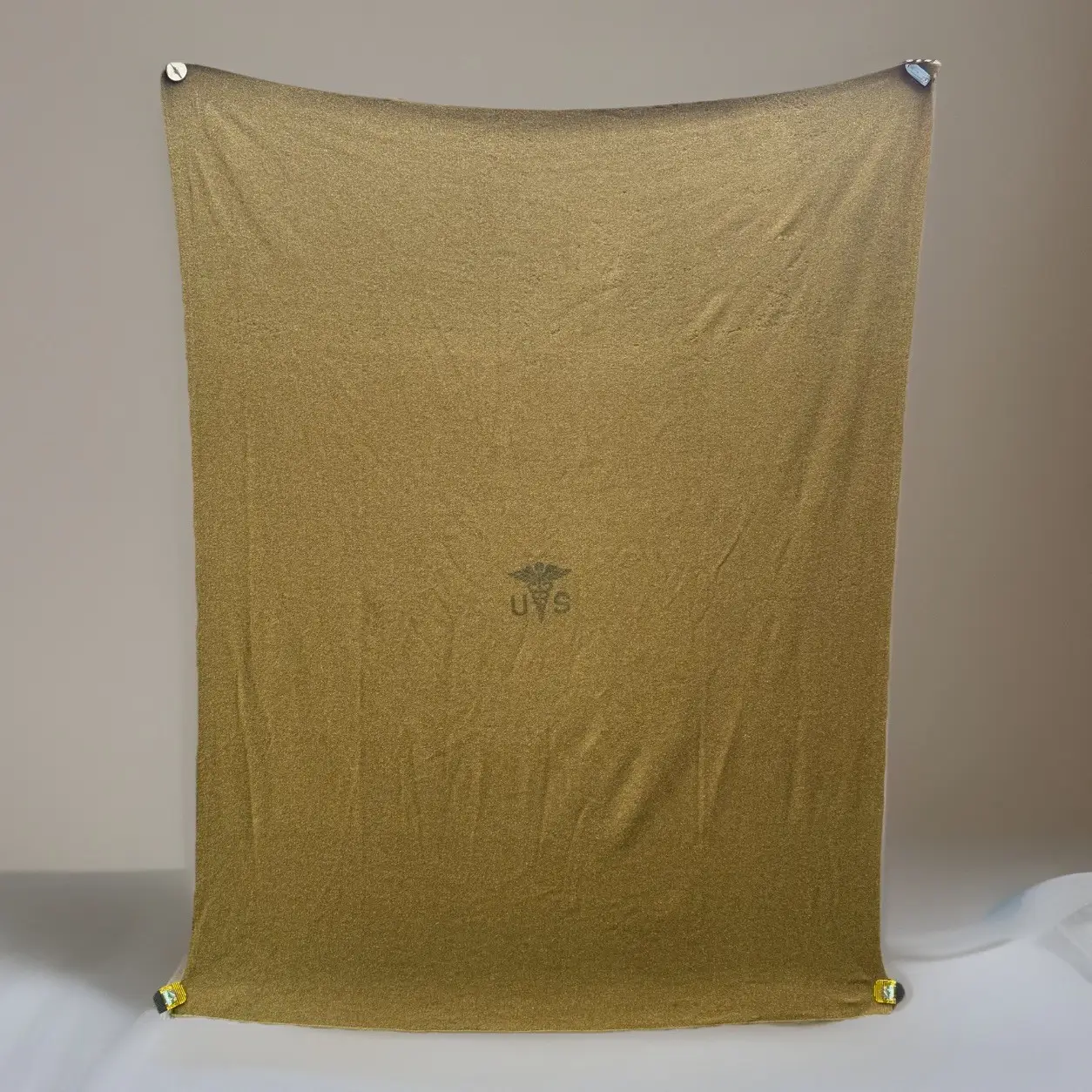
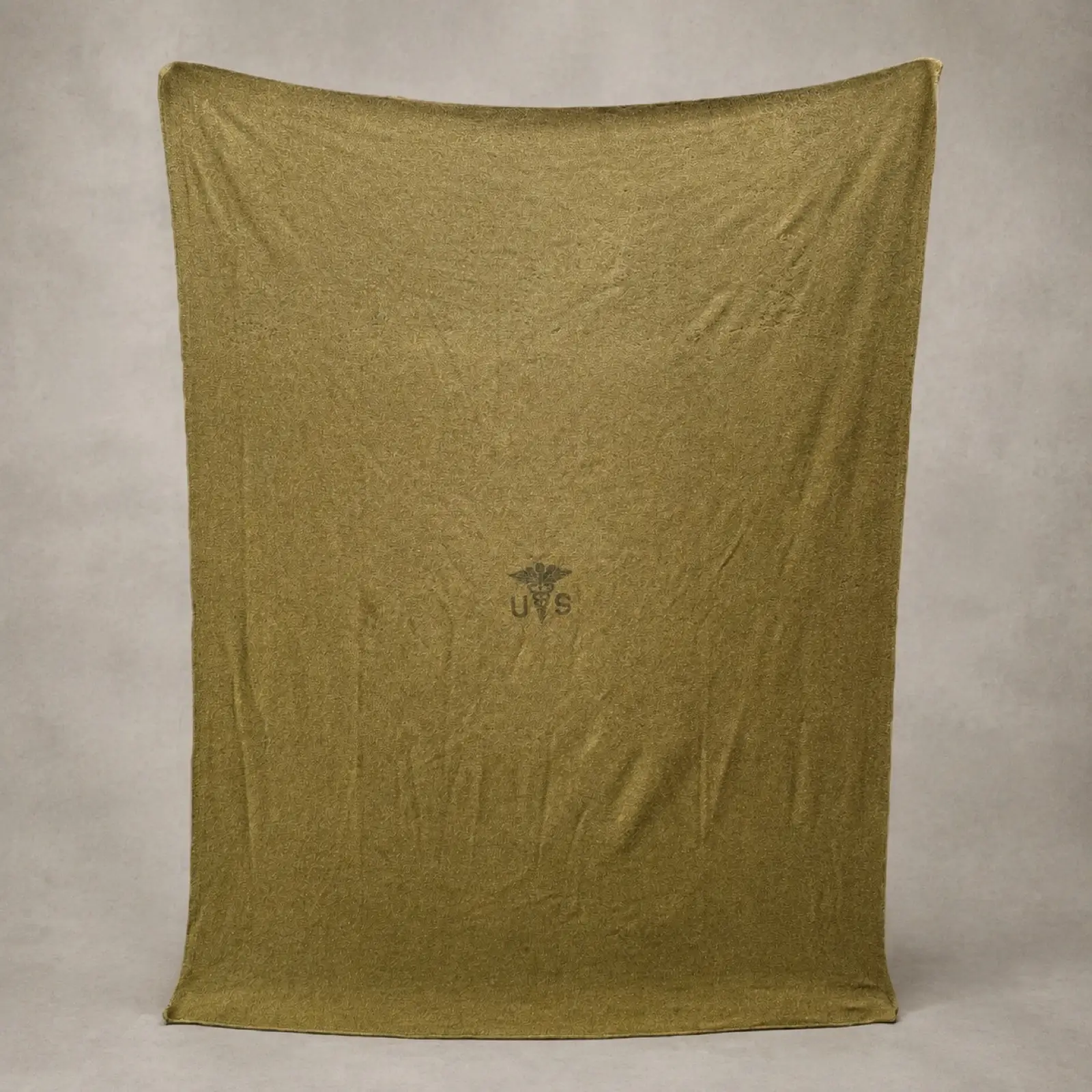
Some objects earn their keep twice — once in service, and again decades later as the warmest thing in the room. A U.S. Army wool blanket is the classic example, and the one in our archive has a better pedigree than most: woven in 1951 by the Faribault Woolen Mill of Faribault, Minnesota, and marked for the Army Medical Department with the caduceus and "US" on olive-drab wool.
A mill on the Cannon River
Faribault Woolen Mill is one of the great survivors of American textile history. Founded in 1865 on the banks of the Cannon River in southern Minnesota, it grew into a fully integrated woolen mill — raw wool in one end, finished blankets out the other — and it is still weaving today, more than a century and a half later. Very few American mills can say that; most of the industry moved offshore or shut down generations ago.
Through the twentieth century, a big part of Faribault's story was military work. When the country mobilized, mills like Faribault turned their looms over to government contracts, producing wool blankets by the tens of thousands. dated military blankets like this one, dated 1951, came out of that same tradition: dense, heavy wool built to government specification, made to survive field use, laundering, and years of storage.
Reading a military blanket
Military wool blankets are one of the most faked and misdescribed categories in surplus, so it's worth knowing what the real markings mean.
- The date matters. Government-contract blankets are typically marked with a contract or manufacture date. Ours reads 1951 — in its documented 1951 production year, when wool procurement surged.
- The maker matters. Many period blankets are unmarked or carry only a spec number; a legible Faribault Woolen Mill label ties the blanket to a specific, storied maker and adds real collector interest.
- The caduceus marks medical service. The winged-staff insignia with "US" indicates Army Medical Department stock — the blankets that equipped hospital wards, aid stations, and evacuation transport.
- Wool content is the point. Period spec called for heavy virgin wool. The weight is unmistakable in hand — modern reproductions feel thin and slick by comparison.
Honest condition, honestly described
This blanket is used — our condition ladder means exactly what it says. It served, it was laundered, and it shows honest vintage wear rather than museum-case perfection. We photograph flaws instead of hiding them; every image in the object record is of the actual blanket, including the markings and label. See the full object record and photos here.
What you get in exchange for that honesty is a genuinely useful antique. Seventy-plus years on, a government-spec wool blanket still does its job better than most things sold as blankets today: warm when damp, naturally flame-resistant, nearly indestructible.
Caring for old wool
If you put a blanket like this back into service — and you should — treat it simply:
- Air it out rather than washing when possible; wool sheds odors on its own.
- When it truly needs washing, use cold water and wool wash, and never a hot dryer. Lay it flat or line-dry.
- Store it clean, in a breathable bag with cedar or lavender. Moths go for soiled wool first.
A blanket like this has already outlived the trucks, tents, and hospitals it served alongside. Cared for, it will outlive us too — which is, more or less, the entire philosophy of this shop. It's in the archive now, waiting for its next assignment. And if military wool is your thing, the archive's Military & Surplus section usually has more where it came from.